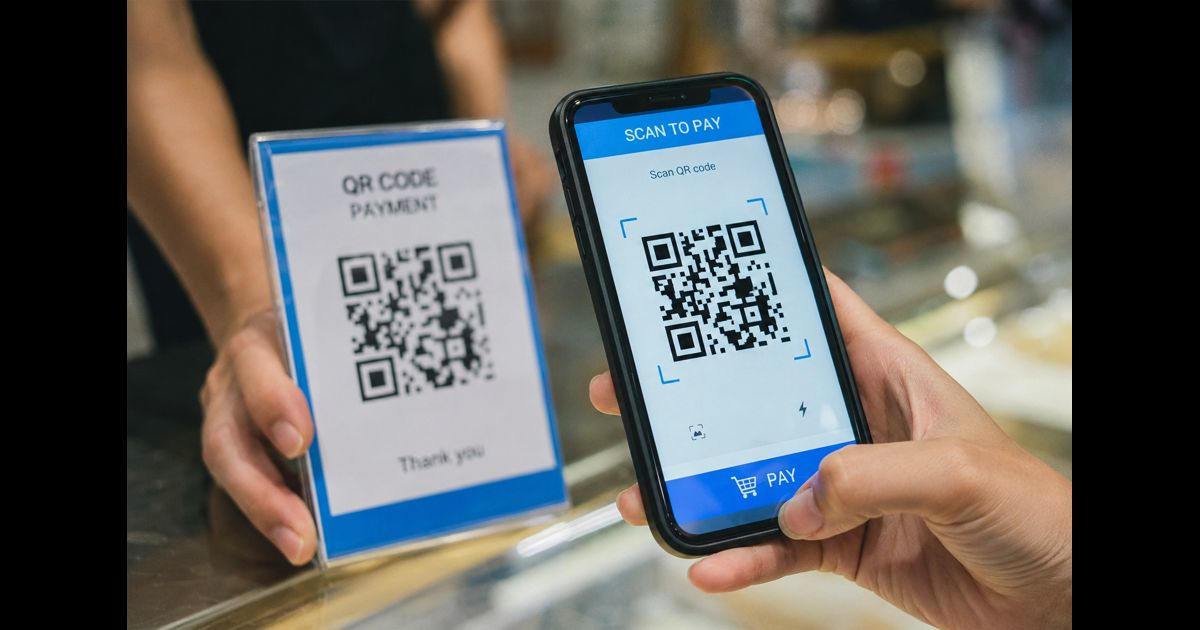
Asia Wallet is presented on asiawallet.io as a proposed unified QR payment service for Asia. Its stated idea is simple: add money locally, keep one fiat balance, and use that balance to pay through participating QR systems in different Asian markets. As of September, 2026, however, the public information available does not establish a full country list, named payment partners, consumer fees, regulatory licences, custody arrangements, or a verified public app release. It should therefore be understood as an emerging payment proposition, not assumed to be a widely available pan-Asian wallet.
That distinction matters. Cross-border QR payments already operate between several Asian markets, but they usually work through participating banks, licensed payment providers, national QR standards, and bilateral or regional payment links. A private service promising broader access would still need to explain exactly which institutions, currencies, merchants, jurisdictions, and safeguards support each transaction.
Asia Wallet at a Glance
|
Question |
What can currently be established |
|
What is Asia Wallet? |
A website presenting a unified QR payment infrastructure for payments across Asia |
|
What does it claim to offer? |
Local top-ups, a single fiat balance, and QR payments across participating Asian markets |
|
Is it a crypto wallet? |
The public description focuses on fiat and QR payments, not cryptocurrency storage or blockchain assets |
|
Which countries are supported? |
A complete, verifiable country list is not publicly clear |
|
Is an official consumer app available? |
No clearly matched Asia Wallet app linked to asiawallet.io was found in the indexed US Apple App Store or Google Play results reviewed |
|
Are fees and exchange-rate margins published? |
Not in the public information reviewed |
|
Is the operator licensed? |
A legal operator and applicable payment licences were not clearly identified in the public information reviewed |
|
Is it the same as AsiaPay or an Asia Coin wallet? |
No. Those are separate products and should not be treated as interchangeable |
What Asia Wallet Is Trying to Solve
Asia does not have one universal retail payment network. A traveler may use QRIS in Indonesia, PromptPay in Thailand, DuitNow QR in Malaysia, SGQR-supported services in Singapore, or another domestic scheme elsewhere. Each market has its own participating institutions, operating rules, settlement arrangements, identity requirements, limits, and consumer protections.
This fragmentation creates a practical problem. A wallet that works at home may not scan a merchant’s code abroad. A traveler may need cash, an international card, a locally supported app, or a bank account connected to a compatible cross-border service. Merchants also face complexity because the payment methods customers expect differ sharply by country.
Asia Wallet proposes to reduce that friction by placing a common user experience above local QR networks. The website describes a model in which a user funds one fiat balance locally and pays across Asia. If fully implemented, the service would act as a connection layer rather than requiring every merchant to adopt a completely new payment method.
How the Payment Model May Work
The public description is not detailed enough to confirm the complete transaction architecture. Based on the stated proposition and the way interoperable QR payments normally operate, a transaction would require several stages.
1. Account Creation and Verification
A regulated payment wallet normally has to determine who the customer is and which services the customer may use. The required checks can vary by country, funding method, account tier, and transaction value. Asia Wallet has not publicly clarified the identity documents, residency rules, age requirements, or account levels that would apply.
2. Local Funding
The phrase “top up locally” suggests that users would add money through a domestic funding method. That could involve a bank transfer, card, connected account, or local payment provider, but the available methods have not been confirmed publicly. Users would need to know the accepted funding sources, top-up charges, processing times, minimums, and withdrawal rules before depositing money.
3. A Fiat Balance
Asia Wallet describes one fiat balance. Fiat means government-issued money rather than a cryptocurrency token. Important unanswered questions include the currency in which the balance is held, who safeguards the funds, whether the balance is segregated from company money, and what happens if the service becomes unavailable.
4. QR Scan and Merchant Recognition
At checkout, the app would need to read a compatible merchant QR code and identify the relevant domestic payment rail, merchant, requested amount, and currency. A QR image alone does not create interoperability. The institutions behind the transaction must have technical and commercial arrangements that allow authorization, routing, clearing, and settlement.
5. Currency Conversion and Confirmation
For a cross-border purchase, the service would need to show the amount charged from the user’s balance and the amount delivered to the merchant. A trustworthy payment screen should disclose the exchange rate, any markup or fee, the merchant’s verified name, and the final total before confirmation. Asia Wallet’s public material does not yet provide enough detail to evaluate its foreign-exchange pricing.
6. Settlement, Records, and Disputes
After authorization, the merchant must receive settlement through the relevant network. The customer should receive a timestamped receipt and a permanent transaction record. A complete service also needs rules for reversals, duplicate charges, refunds, unauthorized payments, failed transactions, account suspension, and complaints. These protections have not been clearly documented for Asia Wallet in the material reviewed.
Asia Wallet Is Not the Same as Existing Cross-Border QR Links
Several Asian central banks and payment-system operators already connect domestic payment rails. Examples include links involving PromptPay, PayNow, DuitNow, QRIS, and VietQR. These arrangements let eligible customers use a participating bank or payment app from one country with a compatible payment system in another.
Project Nexus is another separate initiative. Led through the Bank for International Settlements with participating central banks, it is designed to connect domestic instant-payment systems through a standardized multilateral model. It is not another name for Asia Wallet.
Asia Wallet’s proposition resembles the same broad goal—making regional payments easier—but a similar goal does not prove a partnership, government role, or network connection. Those relationships should be accepted only when the wallet and the relevant bank, regulator, or payment-system operator identify them clearly.
What Has Not Yet Been Publicly Verified
The central issue is not whether a cross-border QR wallet is technically possible. Existing payment links show that it is. The issue is whether this particular service provides enough information for a consumer to evaluate availability, cost, accountability, and risk.
The following details remain unclear in the public material reviewed:
- The legal name of the entity operating the service.
- Its registered address and responsible jurisdiction.
- Payment, money-transmission, or e-money licences.
- The regulator and licence number for each supported market.
- Named banks, wallets, QR networks, settlement institutions, and custodians.
- A confirmed list of live countries and currencies.
- Official App Store and Google Play links tied to asiawallet.io.
- Top-up, payment, withdrawal, inactivity, and refund fees.
- The exchange-rate source and any foreign-exchange markup.
- Balance limits and transaction limits.
- The legal treatment and safeguarding of customer funds.
- Privacy, data-retention, authentication, and account-recovery rules.
- Customer support, complaint escalation, and dispute timelines.
This does not prove that the service is unsafe or illegitimate. It means there is not enough publicly verifiable information to make a confident safety or availability judgment.
How to Check Asia Wallet Before Adding Money
Do not rely on a logo, polished website, social post, or QR code as proof that a financial service is authorized. Complete these checks before installing an app, uploading identification, or transferring funds.
Confirm the Exact Operator
Look for a legal company name, registration number, physical address, and working support details in the website footer, terms, privacy notice, and app-store developer information. The name should be consistent across all of them.
Verify the Licence Independently
Find the operator in the official register of the regulator named by the service. Match the company name, licence number, permitted activities, website domain, and current status. A company registration alone is not a payment licence.
Use Only a Store Link From the Official Domain
Similar names already appear in app stores. An app called AsiaPay, Asia Digital Wallet, or an Asia Coin wallet is not automatically connected to asiawallet.io. Follow a verified store link from the official domain and confirm the listed developer before downloading anything.
Read the Money-Handling Terms
Determine who holds the balance, where funds are kept, whether customer money is safeguarded, and whether deposit protection applies. Digital-wallet balances do not always receive the same protection as bank deposits.
Calculate the Real Payment Cost
Review the exchange rate as well as the visible transaction fee. A service can advertise a low fee while recovering revenue through the currency-conversion spread. Compare the final amount charged with a bank or card quote at the same time.
Test Support Before Funding
Ask a specific question about a supported country, refund, or account limit. A clear, traceable response is more useful than a generic assurance. Do not make a large first deposit simply to test whether support is responsive.
Start With a Small Transaction
If the operator, licence, app, country support, and terms are independently confirmed, begin with an amount you can afford to have temporarily unavailable. Check the merchant name, exchange rate, receipt, balance update, and withdrawal process.
Potential Advantages if the Service Becomes Fully Operational
A genuinely interoperable regional wallet could remove several sources of payment friction:
- Travelers could pay participating merchants without opening a separate wallet in every country.
- Local merchants could accept eligible foreign customers through familiar QR infrastructure.
- A single balance and consistent interface could reduce app switching.
- Clear pre-transaction conversion could make spending easier to understand.
- Local payment rails may expand acceptance beyond merchants that take international cards.
These advantages depend on real network coverage. The number of countries named in marketing is less important than the number of licensed participants, compatible merchants, supported funding routes, and reliable dispute channels actually available to a user.
Practical Limitations a Regional Wallet Must Address
Payment interoperability does not eliminate local rules. A regional service must still manage identity checks, sanctions screening, transaction monitoring, consumer disclosures, privacy obligations, foreign-exchange controls, settlement risk, and different complaint procedures.
Coverage can also be uneven inside one country. A QR standard may support many domestic apps while allowing cross-border payments only through selected institutions or merchants. Dynamic and static QR codes can behave differently, and person-to-person transfers may not have the same availability as merchant payments.
Fast settlement creates another challenge: an instant payment may be difficult to reverse after the customer approves it. Strong merchant verification, confirmation screens, fraud monitoring, account controls, and responsive support are therefore essential parts of regional digital payments, not optional extras.
How Asia Wallet Differs From Similar Names
|
Name |
Main purpose |
Why the distinction matters |
|
Asia Wallet at asiawallet.io |
Proposed fiat-based, cross-border QR payment infrastructure |
This is the service described in this article |
|
AsiaPay wallet in Iraq |
A separate Iraqi electronic wallet associated with AsiaHawala |
Its app, operator, services, and regulatory context do not verify Asia Wallet |
|
AsiaPay Limited |
A Hong Kong-based payment technology and merchant-services company |
It is a distinct business, despite the similar name |
|
Asia Coin wallets |
Crypto wallets that support a token commonly shown as ASIA |
They involve digital assets and private-key or custody questions that differ from a fiat QR wallet |
|
Asia Digital Wallet |
A separately listed blockchain-asset app |
Its app-store presence should not be attributed to asiawallet.io without an official connection |
The safest way to identify a financial product is to match its domain, legal operator, app developer, licence, and support channels—not just its display name.
What Asia Wallet Needs to Publish
For the service to be evaluated as a mature consumer payment product, its public documentation should identify:
- The operating company and jurisdictions.
- Relevant regulators and licence numbers.
- Live countries, currencies, QR schemes, and named partners.
- Official app-store listings and minimum device requirements.
- Funding, spending, withdrawal, and account limits.
- All fees and the method used to calculate currency conversion.
- Customer-fund safeguarding and insolvency treatment.
- Security, privacy, data-sharing, and account-recovery practices.
- Refund, error-resolution, fraud-reporting, and complaint procedures.
- A dated service-status page that distinguishes live, pilot, planned, and unavailable features.
Clear publication of these facts would make the product easier for consumers, merchants, journalists, and answer systems to assess accurately.
Final Thoughts
Asia Wallet presents a relevant idea: one locally funded fiat balance that can pay through QR systems across Asia. The concept fits the region’s movement toward connected instant-payment and national QR networks. The available public information, however, is not yet detailed enough to treat the service as broadly live, licensed across Asia, or suitable for holding funds without further verification.
Before using it, confirm the exact operator, regulatory status, official app, supported countries, participating payment networks, fees, exchange-rate method, fund safeguards, and dispute process. Until those details are clearly published and independently matched, Asia Wallet is best described as an emerging cross-border QR payment proposition rather than a verified universal wallet for Asia.
Frequently Asked Questions
What is Asia Wallet?
Asia Wallet is presented by asiawallet.io as a unified QR payment service that would let users top up locally, hold one fiat balance, and pay across participating Asian markets. Its full live coverage and operating details are not yet publicly clear.
Is Asia Wallet a cryptocurrency wallet?
The official public description emphasizes fiat balance and QR payments. It does not identify Asia Wallet as a cryptocurrency wallet or claim that users must manage tokens or private keys.
Is Asia Wallet available in the United States?
No verified US availability, funding route, regulatory registration, or official app listing tied to asiawallet.io was established in the information reviewed as of September 1, 2026.
Which countries support Asia Wallet?
A complete verified list of live countries has not been publicly established. Do not assume that a country is supported merely because its national QR system exists.
Is Asia Wallet safe?
There is not enough public information to make a confident safety assessment. Verify the operator, licences, official app, fund safeguarding, fees, security terms, and dispute procedures before providing personal information or money.
Is Asia Wallet the same as AsiaPay?
No. AsiaPay is used by separate payment businesses and apps. A similar name does not establish ownership, partnership, or regulatory coverage for Asia Wallet.
Can Asia Wallet scan any QR code in Asia?
That has not been established. QR payment compatibility depends on participating wallets, banks, merchant acquirers, national standards, and cross-border agreements. No wallet should be assumed to work with every QR code.
Does Asia Wallet charge fees?
A complete public fee schedule and foreign-exchange pricing method were not identified. Users should check both direct charges and the exchange-rate margin before making a payment.