Introduction
The rapid growth of financial technology has transformed how individuals and businesses access banking, make payments, transfer money, and manage financial services. Behind many of these innovations is another industry that often receives less attention but plays an equally important role—telecommunications.
Reliable communication networks have become the foundation of modern digital finance. Every mobile payment, online banking session, digital wallet transaction, and real-time financial notification depends on secure and high-speed connectivity. As mobile technology continues to advance, telecommunications and financial technology are becoming more closely integrated, creating faster, safer, and more accessible financial experiences.
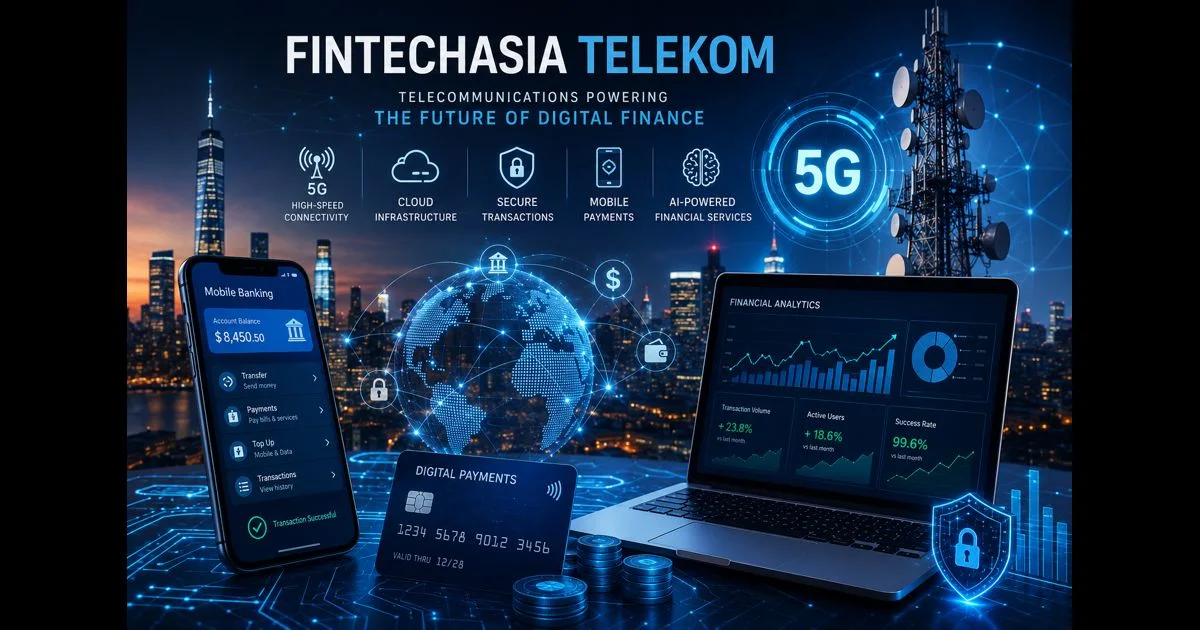
FintechAsia Telekom explores how telecommunications infrastructure supports the growth of digital finance, enabling financial institutions, payment providers, and businesses to deliver secure services across increasingly connected markets. Understanding this relationship helps explain why network reliability, cloud infrastructure, cybersecurity, and mobile connectivity have become essential components of today’s financial ecosystem.
Why Telecommunications Matter in Financial Technology
Modern financial services depend on continuous digital communication.
When customers make mobile payments, verify identities, receive banking notifications, or transfer funds internationally, data moves through secure communication networks within seconds.
Without reliable telecommunications infrastructure, many digital financial services would be unable to operate efficiently.
Telecommunications support financial technology by enabling:
- Real-time payment processing
- Mobile banking services
- Secure customer authentication
- Digital wallet connectivity
- Financial data transmission
- Instant transaction notifications
As financial services become increasingly digital, communication networks continue serving as one of the industry’s most valuable foundations.
Mobile Connectivity Is Expanding Financial Access
Smartphones have significantly changed how people interact with financial services.
Instead of visiting physical bank branches, users can now manage accounts, send payments, monitor transactions, and access financial information directly from mobile applications.
This shift has improved financial accessibility for individuals, small businesses, and communities that previously had limited access to traditional banking infrastructure.
Mobile connectivity supports services such as:
- Digital banking
- Mobile wallets
- Contactless payments
- Peer-to-peer transfers
- QR code payments
- Account management
As mobile internet coverage continues expanding, digital financial services become more accessible across both developed and emerging markets.
Secure Networks Build Customer Confidence
Trust remains one of the most important factors in digital finance.
Customers expect financial transactions to remain private, accurate, and protected against cyber threats.
Telecommunications providers and financial institutions work together to strengthen security through technologies such as:
- Encrypted data transmission
- Multi-factor authentication
- Secure communication protocols
- Fraud detection systems
- Identity verification
- Continuous network monitoring
Strong communication security helps protect customer information while maintaining confidence in digital financial platforms.
Cloud Infrastructure and Faster Financial Services
Cloud computing has become an important part of modern financial technology.
Rather than depending entirely on traditional infrastructure, many financial organizations now use cloud platforms to improve flexibility, scalability, and operational efficiency.
Combined with advanced telecommunications networks, cloud services enable:
- Faster transaction processing
- Real-time financial reporting
- Improved platform reliability
- Better disaster recovery
- Scalable digital banking services
- Efficient system integration
This combination allows financial providers to respond more quickly to customer needs while supporting continuous innovation across digital financial services.
How 5G Is Accelerating Financial Innovation
The introduction of 5G networks is creating new opportunities for financial technology by improving connection speed, reducing latency, and supporting larger numbers of connected devices.
For financial institutions and digital payment providers, these improvements contribute to faster and more reliable services.
Some of the key benefits include:
- Quicker payment authorization
- Improved mobile banking performance
- More stable video identity verification
- Better support for real-time financial services
- Enhanced connectivity for digital businesses
While financial innovation depends on many factors, advanced telecommunications networks provide the infrastructure needed to deliver seamless digital experiences.
Artificial Intelligence and Smarter Financial Services
Artificial intelligence is becoming an important part of both telecommunications and financial technology.
By analyzing large volumes of operational and financial data, AI helps organizations improve efficiency while strengthening customer experiences.
Common applications include:
- Fraud detection
- Transaction monitoring
- Customer support automation
- Predictive analytics
- Personalized financial services
- Network performance optimization
Instead of replacing human expertise, AI supports faster analysis and better decision-making, allowing financial organizations to respond more effectively to changing customer needs.
Challenges in a Connected Financial Ecosystem
As digital finance continues expanding, organizations must address several ongoing challenges to maintain secure and reliable services.
Cybersecurity
Financial systems remain attractive targets for cyber threats. Strong encryption, continuous monitoring, and secure authentication help reduce security risks.
Data Privacy
Protecting customer information has become a fundamental responsibility. Businesses must manage financial data responsibly while complying with privacy regulations.
Network Reliability
Digital financial services depend on stable communication networks. Reliable infrastructure helps ensure uninterrupted access to banking, payments, and financial applications.
Continuous Innovation
Customer expectations continue evolving. Financial organizations must improve services regularly while maintaining security, compliance, and operational stability.
The Future of FinTech and Telecommunications
The relationship between financial technology and telecommunications will continue strengthening as digital services become more advanced.
Future developments are expected to include:
- Wider adoption of AI-powered financial services
- Expansion of real-time payment networks
- Smarter digital identity verification
- Greater cloud integration
- More secure mobile financial platforms
- Faster cross-border financial connectivity
These technologies will help businesses improve efficiency while providing customers with more convenient and secure financial experiences.
Organizations that invest in secure infrastructure, responsible innovation, and customer-focused digital services will be better positioned for long-term growth.
Frequently Asked Questions
What is FintechAsia Telekom?
FintechAsia Telekom explores how telecommunications infrastructure supports financial technology through secure connectivity, mobile banking, digital payments, cloud services, and modern financial innovation.
Why are telecommunications important for fintech?
Telecommunications provide the secure communication networks that enable digital banking, mobile payments, financial data transmission, customer authentication, and real-time financial services.
How does 5G benefit financial technology?
5G improves network speed, reduces latency, strengthens mobile banking performance, supports faster payment processing, and enables more reliable digital financial services.
How does AI improve modern financial services?
Artificial intelligence helps detect fraud, automate customer support, analyze financial data, optimize operations, and improve decision-making across digital financial platforms.
Conclusion
Financial technology and telecommunications have become closely connected in today’s digital economy. Secure communication networks, cloud infrastructure, artificial intelligence, and mobile connectivity work together to support the fast, reliable financial services that businesses and consumers increasingly depend on.
FintechAsia Telekom highlights the growing importance of this relationship by examining the technologies that make modern digital finance possible. As innovation continues across both industries, organizations that combine reliable connectivity with secure financial systems will be better prepared to deliver smarter services, strengthen customer trust, and support sustainable digital growth.