You spend hard-earned fundraising dollars creating a beautiful outdoor memorial to honor your community. You invite families and sponsors to celebrate the new installation. Then, a few short years later, the names of your most generous donors begin to peel, fade, and disappear.
It is a heartbreaking and embarrassing scenario for any legacy planner. When donors pay for a permanent tribute, they expect their family name or corporate logo to stand the test of time.
The good news is that the root problem is rarely the brick itself. The failure almost always comes down to the outdated, temporary engraving methods applied to its surface. By understanding why painted lettering fails under harsh weather conditions, legacy planners can choose modern engraving technology that guarantees a permanent, maintenance-free tribute.
Key Takeaways
- Natural clay brick is incredibly durable, but applying paint or epoxy drastically reduces the lifespan of the inscription.
- Freeze-thaw cycles and UV rays inevitably destroy paint-filled sandblasted lettering.
- Laser vitrification is a permanent alternative that alters the brick’s structural composition rather than relying on temporary fillers.
- Choosing the right engraving method drastically reduces long-term maintenance while expanding fundraising potential.
The Natural Lifespan of a Clay Brick
Clay is an incredibly durable, low-maintenance material naturally designed to withstand harsh outdoor environments. Builders have relied on it for centuries to construct roads, buildings, and plazas that easily outlast their creators.
A standard clay paver is built for generations of daily use. In fact, the National Institute for Standards and Technology (NIST) estimates the lifespan of clay brick to be 100 years. This impressive century-long durability makes it the perfect foundation for a donor memorial or fundraising pathway.
However, that impressive lifespan only applies if the surface integrity of the brick remains uncompromised. When traditional engraving methods cut deep structural grooves or apply harmful chemical coatings to the face of the paver, that natural longevity drops significantly. To protect the brick, you must protect its surface.
Why Do Paint and Epoxy Fail on Outdoor Bricks?
Traditional sandblasted bricks rely heavily on paint and epoxy fillers to make the engraved text visible. Unfortunately, constant exposure to ultraviolet light rapidly degrades these synthetic materials. As the sun beats down on the memorial day after day, the paint inevitably begins to dry out, lose its contrast, and flake away.
Beyond the sun, winter weather delivers an even more destructive blow. As experts note, brick is a naturally porous material that must “breathe,” and painting it creates a barrier that traps moisture, causing the surface to crack and spall during freeze-thaw cycles.
When it rains or snows, water sneaks into the deep cuts of a sandblasted brick. Once temperatures drop below freezing, that trapped water expands into ice. This aggressive expansion pushes directly against the rigid epoxy or paint, physically forcing the lettering right out of the groove.
Once you understand how harsh weather and UV rays inevitably break down paint and epoxy fillers, it becomes clear why traditional sandblasting falls short for outdoor memorials. To ensure your tributes remain permanently legible without constant maintenance, it is essential to choose custom engraved memorial bricks that use advanced laser vitrification instead of temporary paint.
The Structural Difference Between Sandblasting and Laser Engraving
Understanding the physical differences between engraving methods is the best way to protect your fundraising investment. Traditional sandblasting requires a physical abrasive, usually blasted at high pressure, to cut deep voids directly into the face of the brick.
Because the raw, exposed clay inside that deep cut offers poor visual contrast, manufacturers have no choice but to fill the void with high-contrast paint or thick epoxy. You are essentially paying for a temporary plug inside a damaged brick.
Modern laser engraving takes a completely different scientific approach. This method requires no deep structural cuts and relies on absolutely no foreign fillers. Instead of carving away the physical material, the laser interacts safely with the natural elements already present in the clay, completely eliminating the risk of weather-induced peeling.
| Feature | Traditional Sandblasting | Modern Laser Engraving |
|---|---|---|
| Engraving Process | Cuts deep physical voids into the clay | Uses high heat to alter the surface of the clay |
| Fillers Used | Requires temporary paint or thick epoxy | Requires no foreign fillers or synthetic paints |
| Weather Resistance | Highly susceptible to UV fading and freeze-thaw damage | Completely weatherproof and impervious to UV rays |
| Long-Term Maintenance | Requires frequent repainting and structural repair | Maintenance-free, only requires occasional rinsing |
What is Laser Vitrification?
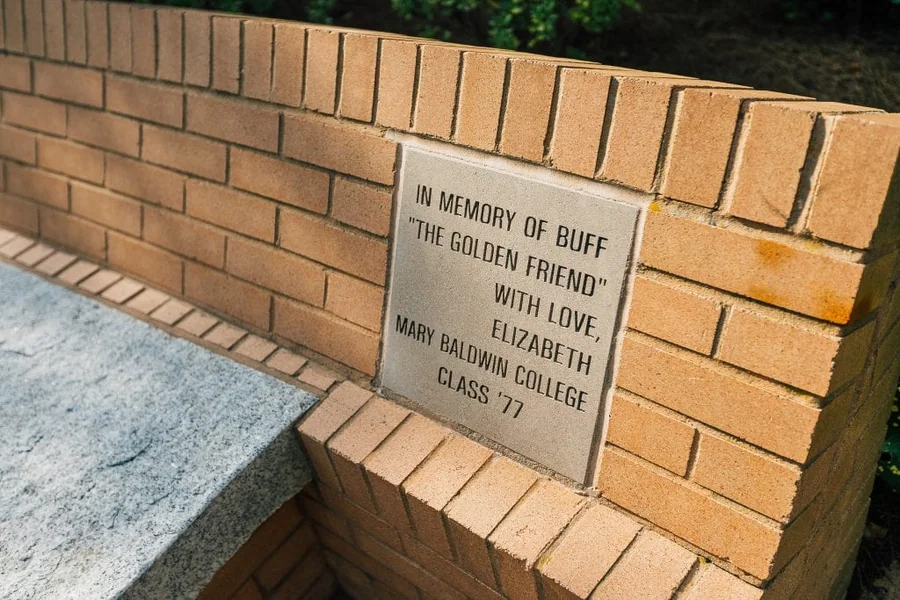
The secret behind the permanence of laser engraving is a process called “vitrification.” In simple terms, vitrification is a process that uses high-heat, proprietary laser technology to transform the clay into a hardened, glass-like mark. The intense heat of the laser physically alters the composition of the brick’s surface, turning it into a dark, highly contrasted inscription.
Because this dark mark physically becomes part of the brick itself, it is completely resistant to chipping, fading, and peeling. The text cannot fall out because there is no filler to fall out.
Furthermore, laser vitrification is precise enough to perfectly preserve complex, personalized details. Legacy planners can easily include multi-line text, intricate corporate logos, personal signatures, and even children’s drawings on a brick. The laser captures these fine lines without losing any clarity over time, offering donors a truly custom experience.
Planning a Permanent Tribute: Maintenance and Donor Considerations
Managing a successful brick campaign goes well beyond the initial installation. You have to consider the long-term upkeep of the space and figure out how to keep your donors happy for decades.
Choosing laser-engraved bricks creates a remarkably low-maintenance reality for your organization. Because the vitrified marks match the lifespan of standard architectural pavers, your groundskeeping team can put away the touch-up paint. They only need to perform occasional rinsing with mild detergent and water to keep the memorial looking pristine.
Beyond maintenance, modern engraving opens the door for versatile campaign management. Offering tiered sizing, such as standard 4×8 and larger 8×8 bricks, helps legacy planners balance affordable options for individual donors with high-tier opportunities for corporate sponsors.
You also have a unique opportunity to build tangible donor connections outside of the physical memorial space. Top-tier programs often offer exact scaled-down “Mini Bricks” and full-sized desktop replica packages. These desk replicas come complete with protective felt dots and official Certificates of Authenticity.
Shipping these beautiful keepsakes directly to donors acts as an immediate revenue upsell for your campaign. It also brilliantly solves the problem of connecting with dedicated supporters who live too far away to visit the physical memorial in person.
Conclusion
Protecting a memorial’s legacy requires abandoning temporary painted fillers in favor of permanent, technologically advanced solutions. When you rely on paint and epoxy, you are fighting a losing battle against the sun, rain, and freezing temperatures.
Laser vitrification is the only method that truly aligns with the natural 100-year lifespan of an outdoor clay brick. It transforms the clay into a permanent, weather-resistant mark that requires zero touch-ups.
As you plan your next community project, you deserve to build with confidence. Choosing a permanent engraving method provides the peace of mind that comes from knowing your fundraising campaign will result in a timeless tribute that tells a story for generations.