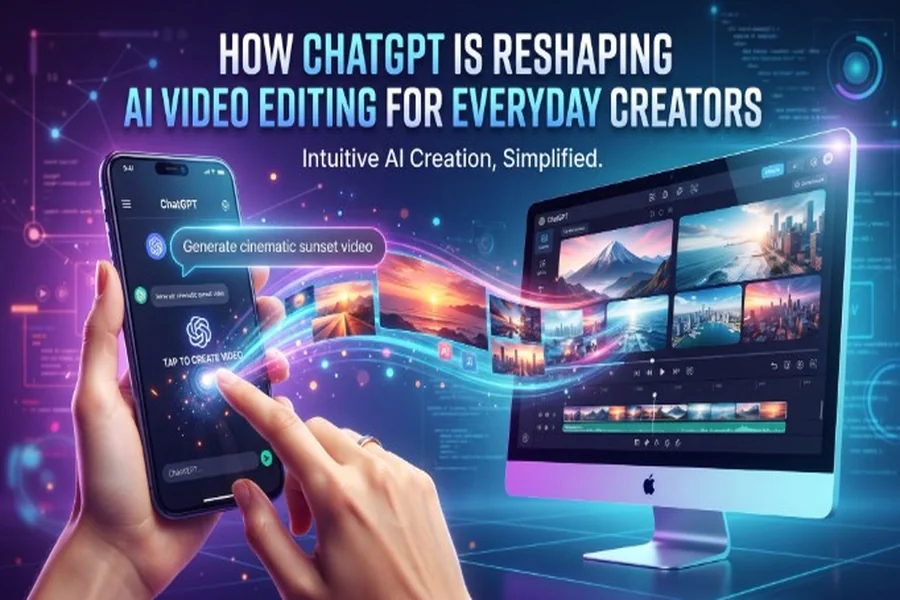
Video content now drives most online engagement. Yet editing still feels intimidating to many beginners. Complex timelines and layered menus often scare off new creators. ChatGPT is changing that reality one prompt at a time. Instead of clicking through dozens of tools, creators can now type what they want. The software listens, interprets, and executes the edit. This shift marks a turning point for casual video makers everywhere. Even skeptics are starting to take notice.
ChatGPT Brings a New Language to Video Editing
Traditional editing software speaks in technical terms. Words like keyframes, transitions, and render settings confuse newcomers. ChatGPT translates that language into plain conversation. A creator can simply ask for a faster cut or a warmer tone. The AI then applies the change instantly. This conversational approach removes the steepest part of the learning curve. As a result, more people feel confident starting their first project.
Meanwhile, seasoned editors also benefit from this shift. They save time on repetitive tasks like trimming or color matching. Instead of manually adjusting each clip, they describe the outcome they want. The AI handles the technical execution behind the scenes. Consequently, professionals can focus more on storytelling and creative direction.
From Manual Timelines to Conversational Commands
Traditional editing demanded hours of manual dragging and clicking. Every cut, transition, and caption required direct input. ChatGPT-powered tools replace much of that manual labor. Creators describe their vision, and the AI builds a working draft. Naturally, this doesn’t eliminate the need for human judgment. Editors still review, refine, and approve every suggestion. Even so, the starting point arrives much faster than before.
This shift also changes how people plan their content. Instead of storyboarding every frame in advance, creators can experiment freely. They test different tones, pacing, and styles within minutes. Because of this flexibility, creative risks become easier to take. Mistakes cost less time, so experimentation feels less intimidating. Over time, this freedom encourages more original work.
Why Everyday Creators Benefit Most
Professional studios already had access to editing specialists. Everyday creators, however, often work alone. They juggle filming, editing, and publishing without a team. ChatGPT fills that gap by acting like a virtual assistant. It suggests cuts, writes captions, and even recommends background music. Suddenly, a solo creator can produce content that looks professionally made.
Small business owners see similar advantages. Many can’t afford dedicated video teams or expensive software training. With conversational AI tools, they produce marketing videos in-house. This approach saves money while keeping content authentic. In turn, brands maintain a consistent voice without outsourcing every project.
Students and hobbyists gain just as much value. They learn editing concepts through guided AI suggestions rather than trial and error. Over time, this exposure builds genuine editing skill. The AI acts as both a tool and teacher throughout the process. As a result, confidence grows alongside technical ability.
The Rise of the AI Video Editor with ChatGPT
Platforms are now merging conversational AI directly into their editing suites. This integration allows users to type instructions instead of navigating menus. One clear example is the AI video editor with ChatGPT, which blends natural commands with a full editing toolkit. Creators can request specific cuts, effects, or pacing changes through simple text prompts. The system then executes those requests within the existing project timeline.
This kind of integration signals where the industry is heading. Editing software no longer requires deep technical mastery. Instead, it rewards clear communication and creative intent. Consequently, more creators can produce polished videos without formal training. The barrier between idea and finished product keeps shrinking.
Balancing Automation with Creative Control
Automation raises a fair question about creative ownership. Some worry that AI suggestions might overshadow personal style. In practice, most tools still leave final decisions to the creator. The AI proposes options, but humans choose what fits their vision. This balance keeps the creative process personal rather than mechanical.
Additionally, creators can reject or adjust any AI-generated suggestion. Nothing gets locked in without explicit approval. This flexibility preserves individuality across different channels and brands. Two creators using the same tool can still produce distinct results. Their choices, tone, and pacing preferences shape the final output.
Still, some tasks benefit from full automation. Basic trimming, audio leveling, and format conversion rarely need creative input. Handing these tasks to AI frees up time for higher-value work. Creators can then focus on scripting, storytelling, and audience connection.
Getting Started with Conversational AI Editing
Beginners often wonder where to start with AI-assisted editing. The process usually begins with a simple written prompt. A creator might describe the mood, pace, or message of a clip. From there, the AI generates a first draft for review. Small adjustments follow, refined through natural back-and-forth conversation.
Practice makes this process even smoother over time. The more specific a prompt, the more accurate the result. Creators soon learn which phrases produce the best outcomes. This learning curve, however, remains far gentler than mastering manual software. Within a few sessions, most users feel comfortable navigating the workflow.
What This Shift Means for the Future of Content Creation
Video content will likely keep growing across every platform. Audiences expect frequent uploads and consistent quality. Meeting that demand manually becomes harder as competition increases. ChatGPT-driven editing tools offer a practical solution to this pressure. They help creators publish more without sacrificing production value.
Looking ahead, expect deeper integration between AI chat models and editing software. Voice commands may eventually replace typed prompts entirely. Real-time suggestions could appear as creators film raw footage. Even so, the core principle will likely remain unchanged. Technology should support creative vision, not replace it.
For now, everyday creators have more power than ever before. They can experiment, iterate, and publish faster than previous generations. Conversational AI tools remove technical barriers that once limited creativity. Instead, they open doors for anyone with a story to tell.
Final Thoughts
ChatGPT hasn’t just changed how people write or research. It has reshaped how people create and edit video content. Everyday creators now hold tools once reserved for professionals. Clear communication, not technical mastery, drives the editing process today. As these tools evolve, video creation will keep becoming more accessible. Anyone with an idea can now bring it to life. The next generation of storytellers may never touch a traditional timeline at all.